Java concurrency (multi-threading). This article describes how to do concurrent programming with Java. It covers the concepts of parallel programming, immutability, platform and virtual threads, the executor framework (thread pools), futures, callables, CompletableFuture and the fork-join framework.
1. Concurrency
1.1. What is concurrency?
Concurrency refers to the ability to execute multiple programs or parts of a program simultaneously. By performing time-consuming tasks asynchronously or in parallel, concurrency enhances both the throughput and interactivity of applications.
Modern computers typically feature multiple CPUs or cores within a single CPU. Effectively leveraging these multi-core architectures is crucial for building successful high-volume applications.
1.2. Processes vs. threads
A process operates independently and in isolation from other processes. It cannot directly access shared data in different processes. The operating system allocates resources, such as memory and CPU time, to each process.
In contrast, a thread is a lightweight process that shares the same memory space with other threads in the same process. Each thread has its own call stack and cache. When a thread accesses shared data, it stores the data in its cache for faster access.
In Java, applications typically run within a single process, but they can utilize multiple threads to achieve parallel processing and asynchronous behavior.
2. Improvements and issues with concurrency
2.1. Limits of concurrency gains
In a Java application, multiple threads are utilized to achieve parallel processing and asynchronous behavior. Concurrency enables faster execution of certain tasks by dividing them into subtasks that can run simultaneously. However, the overall performance gain is constrained by the portion of the task that can be executed in parallel.
The theoretical possible performance gain can be calculated by the following rule which is referred to as Amdahl’s Law.
If F is the percentage of the program that cannot run in parallel and N is the number of processes, then the maximum performance gain is 1 / (F+ ((1-F)/N)).
2.2. Concurrency issues
While threads have their own call stacks, they can also access shared data, leading to two primary challenges: visibility and access problems.
-
Visibility Problem: This occurs when Thread A reads shared data that Thread B subsequently modifies, and Thread A remains unaware of this change. As a result, Thread A may operate on stale data, leading to inconsistencies.
-
Access Problem: This arises when multiple threads attempt to read and modify the same shared data simultaneously. This can result in data corruption or unpredictable behavior.
Visibility and access problems can lead to critical failures, including:
-
Liveness Failure: The program may become unresponsive due to issues in concurrent data access, such as deadlocks or starvation.
-
Safety Failure: The program may produce incorrect or inconsistent data due to improper handling of shared resources.
3. Concurrency in Java
3.1. Processes and threads
A Java program operates within its own process and starts with a single thread, the main thread.
Java provides built-in support for multi-threading through the Thread class, enabling the creation of new threads for concurrent execution.
The java.util.concurrent package provides higher-level concurrency utilities.
It introduces more sophisticated mechanisms for thread management, synchronization, and communication.
3.2. Locks and thread synchronization
Java employs locks to ensure that specific sections of code are executed by only one thread at a time, preventing concurrent access issues.
The simplest way to implement locking in Java is by using the synchronized keyword.
This keyword can be applied to methods and to blocks of code, it cannot be applied to a class declaration.
The synchronized keyword guarantees the following:
-
Only one thread can execute a synchronized method or block at any given time.
-
Any thread entering a synchronized block will see the effects of all prior modifications that were protected by the same lock.
Synchronization is crucial for mutually exclusive access to shared resources and reliable communication between threads.
You can apply the synchronized keyword at the method level to restrict access, ensuring that only one thread can enter the method at a time.
Any other thread attempting to call this method will be forced to wait until the first thread exits.
A synchronized instance method uses the object itself (this) as the lock, a synchronized static method uses the class object as the lock.
public synchronized void critical() {
    // Thread-critical operations go here
}
Alternatively, you can use the synchronized keyword to protect specific blocks of code within a method.
Such a block is guarded by a lock object.
Any object can serve as a lock, a common practice is to use a dedicated private final Object lock = new Object(); field so that no other code can accidentally synchronize on the same lock.
Avoid using strings as locks, as string literals are interned by the JVM and unrelated code could end up sharing the same lock.
All code protected by the same lock can only be executed by one thread at a time.
For example, consider the following CrawledSites data structure, which ensures that only one thread at a time can execute the guarded blocks of the add() and next() methods.
package de.vogella.pagerank.crawler;

import java.util.ArrayDeque;
import java.util.Deque;
import java.util.HashSet;
import java.util.Set;

/**
 * Data structure for a web crawler. Tracks visited sites and maintains a
 * queue of sites yet to be crawled.
 *
 * @author Lars Vogel
 */
public class CrawledSites {
    private final Set<String> crawledSites = new HashSet<>();
    private final Deque<String> linkedSites = new ArrayDeque<>();

    public void add(String site) {
        synchronized (this) {
            if (!crawledSites.contains(site)) {
                linkedSites.add(site);
            }
        }
    }

    /**
     * Retrieves the next site to crawl. Returns null if there are no sites left.
     */
    public String next() {
        synchronized (this) {
            String site = linkedSites.poll();
            if (site != null) {
                crawledSites.add(site);
            }
            return site;
        }
    }
}
3.3. Volatile
A variable declared with the volatile keyword guarantees that any thread reading the field will see the most recently written value.
It is important to note that the volatile keyword only solves the visibility problem, it does not provide mutual exclusion.
Compound operations like i++ on a volatile variable are still not atomic, use the atomic classes from java.util.concurrent.atomic or synchronization for such operations.
Writing to a volatile variable also establishes a happens-before relationship: all writes made by a thread before it writes to the volatile variable are visible to any thread that subsequently reads that volatile variable.
4. The Java memory model
4.1. Overview
The Java memory model describes the communication between the memory of the threads and the main memory of the application.
It defines the rules how changes in the memory done by threads are propagated to other threads.
The Java memory model also defines the situations in which a thread re-freshes its own memory from the main memory.
It also describes which operations are atomic and the ordering of the operations.
4.2. Atomic operation
An atomic operation is an operation which is performed as a single unit of work without the possibility of interference from other operations.
The Java language specification guarantees that reading or writing a variable is an atomic operation (unless the variable is of type long or double).
Operations on variables of type long or double are only atomic if they are declared with the volatile keyword.
Assume i is defined as int.
The i++ operation is not an atomic operation in Java.
This also applies for the other numeric types, e.g., long.
The i++ operation is not atomic because it is a sequence of operations: reading the current value, incrementing it, and writing the new value back.
But between the read and the write the value of i might have changed.
The Java language provides atomic variables, e.g., AtomicInteger or AtomicLong which provide methods like getAndDecrement(), getAndIncrement() and getAndSet().
4.3. Memory updates in synchronized code
The Java memory model guarantees that each thread entering a synchronized block of code sees the effects of all previous modifications that were guarded by the same lock.
5. Immutability and defensive copies
5.1. Immutability
The simplest way to avoid problems with concurrency is to share only immutable data between threads. Immutable data is data that cannot be changed.
Since Java 16, the easiest way to define an immutable data carrier is a record. A record automatically makes all its fields final and only provides accessor methods, no setters.
public record Person(String name, int age) {
}
Note that a record is only shallowly immutable, if a record component refers to a mutable object such as a list, that object can still be changed.
In this case create a defensive copy in the record’s constructor, e.g., via List.copyOf().
To make a regular class immutable define the class and all its fields as final.
Also ensure that no reference to fields escape during construction. Therefore any field must:
-
be private
-
have no setter method
-
be copied in the constructor if it is a mutable object to avoid changes of this data from outside
-
never be directly returned or otherwise exposed to a caller
-
not change or if a change happens this change must not be visible outside
An immutable class may have some mutable data which is used to manage its state but from the outside neither this class nor any attribute of this class can get changed.
For all mutable fields, e.g., arrays that are passed from the outside to the class during the construction phase, the class needs to make a defensive copy of the elements to make sure that no other object from the outside can change the data.
5.2. Defensive copies
You must protect your classes from calling code. Assume that calling code will do its best to change your data in a way you did not expect it. While this is especially true in the case of immutable data, it is also true for non-immutable data which you do not expect to be changed from outside your class.
To protect your class against that, you should copy data which you receive and only return copies of data to calling code.
The following example creates a copy of a list (ArrayList) and returns only the copy of the list. This way the client of this class cannot remove elements from the list.
package de.vogella.performance.defensivecopy;

import java.util.ArrayList;
import java.util.Collections;
import java.util.List;

public class MyDataStructure {
    List<String> list = new ArrayList<String>();

    public void add(String s) {
        list.add(s);
    }

    /**
     * Makes a defensive copy of the List and return it
     * This way cannot modify the list itself
     *
     * @return List<String>
     */
    public List<String> getList() {
        return Collections.unmodifiableList(list);
    }
}
6. Threads in Java
The base means for concurrency is the java.lang.Thread class.
A Thread executes an object of type java.lang.Runnable.
Runnable is a functional interface which defines the run() method.
This method is called by the Thread object and contains the work which should be done.
Therefore the Runnable is the task to perform.
The Thread is the worker who is doing this task.
The following demonstrates a task (Runnable) which counts the sum of a given range of numbers.
Create a new Java project called de.vogella.concurrency.threads for the example code of this section.
package de.vogella.concurrency.threads;

/**
 * MyRunnable will count the sum of the number from 1 to the parameter
 * countUntil and then write the result to the console.
 * <p>
 * MyRunnable is the task which will be performed
 *
 * @author Lars Vogel
 *
 */
public class MyRunnable implements Runnable {
    private final long countUntil;

    MyRunnable(long countUntil) {
        this.countUntil = countUntil;
    }

    @Override
    public void run() {
        long sum = 0;
        for (long i = 1; i < countUntil; i++) {
            sum += i;
        }
        System.out.println(sum);
    }
}
The following example demonstrates the usage of the Thread class together with a Runnable.
It starts several threads and uses the join() method to wait until all of them have finished.
package de.vogella.concurrency.threads;

import java.util.ArrayList;
import java.util.List;

public class Main {

    public static void main(String[] args) throws InterruptedException {
        // We will store the threads so that we can wait for them to finish
        List<Thread> threads = new ArrayList<>();
        // We will create 500 threads
        for (int i = 0; i < 500; i++) {
            Runnable task = new MyRunnable(10000000L + i);
            Thread worker = new Thread(task);
            // We can set the name of the thread
            worker.setName(String.valueOf(i));
            // Start the thread, never call method run() directly
            worker.start();
            // Remember the thread for later usage
            threads.add(worker);
        }
        // Wait until all threads are finished
        for (Thread thread : threads) {
            thread.join();
        }
        System.out.println("All threads are finished");
    }
}
Using the Thread class directly has the following disadvantages:
-
Creating a new platform thread causes some performance overhead.
-
Too many threads can lead to reduced performance, as the CPU needs to switch between these threads.
-
You cannot easily control the number of threads, therefore you may run into out of memory errors due to too many threads.
The java.util.concurrent package offers improved support for concurrency compared to the direct usage of Thread.
Virtual threads, described in the next section, remove most of the scalability limitations of platform threads.
7. Virtual threads
Threads created via the Thread class as shown in the previous section are called platform threads.
Each platform thread is a thin wrapper around an operating system thread, which makes it a relatively expensive resource.
Since Java 21, Java also supports virtual threads. A virtual thread is a lightweight thread managed by the Java runtime instead of the operating system. The runtime mounts a virtual thread on a platform thread (the so-called carrier thread) to run it. When the virtual thread blocks, for example while waiting for I/O, it is unmounted and the carrier thread can run other virtual threads.
Virtual threads are cheap to create, an application can run millions of them. This makes the thread-per-task programming style scale well, for example one virtual thread per incoming server request. Virtual threads are intended for tasks that spend most of their time waiting, e.g., for network or file I/O. They do not make CPU-bound code faster, as the number of processor cores still limits how much work can run in parallel.
You can create and start a virtual thread via the Thread.ofVirtual() builder or via the Thread.startVirtualThread() convenience method.
package de.vogella.concurrency.virtualthreads;

public class VirtualThreadsExample {

    public static void main(String[] args) throws InterruptedException {
        Runnable task = () -> System.out.println("Running in " + Thread.currentThread());

        // create and start a virtual thread via the builder
        Thread virtualThread = Thread.ofVirtual().name("my-virtual-thread").start(task);

        // convenience method to start a virtual thread
        Thread anotherVirtualThread = Thread.startVirtualThread(task);

        // wait until both virtual threads are finished
        virtualThread.join();
        anotherVirtualThread.join();
    }
}
To run many tasks on virtual threads, use the Executors.newVirtualThreadPerTaskExecutor() method.
This executor creates a new virtual thread for every submitted task.
Because virtual threads are so cheap, they should never be pooled or reused, simply create a new one for each task.
Since Java 24, code holding a lock via the synchronized keyword no longer prevents a virtual thread from being unmounted (this limitation was known as pinning).
Therefore existing code using synchronized works well with virtual threads.
|
7.1. Scoped values and structured concurrency
Java 25 finalized scoped values (java.lang.ScopedValue), which allow a thread to share an immutable value with its child threads.
Scoped values are the recommended alternative to ThreadLocal when working with a large number of virtual threads.
Structured concurrency (java.util.concurrent.StructuredTaskScope) treats groups of related tasks running in different threads as a single unit of work.
It is still a preview feature in Java 25 and must be enabled via the --enable-preview compiler and runtime flag.
8. Thread pools with the executor framework
| You find these examples in the source section in Java project called de.vogella.concurrency.threadpools. |
Thread pools manage a pool of worker threads. The thread pools contain a work queue which holds tasks waiting to get executed.
A thread pool can be described as a collection of Runnable objects (work queue) and a collection of running threads.
These threads are constantly running and are checking the work queue for new work.
If there is new work to be done they execute this Runnable.
The java.util.concurrent.Executor interface defines the execute(Runnable r) method to add a new Runnable object to the work queue.
The ExecutorService interface extends Executor with lifecycle methods that allow to shut down the executor and to wait for termination.
The Executors class provides factory methods for common executor configurations, e.g., Executors.newFixedThreadPool(int n) which creates a pool of n worker threads.
ExecutorService implements AutoCloseable, therefore you can use it in a try-with-resources statement.
The close() method waits until all submitted tasks have completed and then shuts the executor down.
If you want to use one thread pool with one thread which executes several runnables you can use the Executors.newSingleThreadExecutor() method.
To run every task in its own virtual thread, use the Executors.newVirtualThreadPerTaskExecutor() method.
|
Create again the Runnable.
package de.vogella.concurrency.threadpools;

/**
 * MyRunnable will count the sum of the number from 1 to the parameter
 * countUntil and then write the result to the console.
 * <p>
 * MyRunnable is the task which will be performed
 *
 * @author Lars Vogel
 *
 */
public class MyRunnable implements Runnable {
    private final long countUntil;

    MyRunnable(long countUntil) {
        this.countUntil = countUntil;
    }

    @Override
    public void run() {
        long sum = 0;
        for (long i = 1; i < countUntil; i++) {
            sum += i;
        }
        System.out.println(sum);
    }
}
Now you run your runnables with the executor framework.
package de.vogella.concurrency.threadpools;

import java.util.concurrent.ExecutorService;
import java.util.concurrent.Executors;

public class Main {
    private static final int NTHREADS = 10;

    public static void main(String[] args) {
        // close() waits until all submitted tasks have completed
        // and then shuts the executor down
        try (ExecutorService executor = Executors.newFixedThreadPool(NTHREADS)) {
            for (int i = 0; i < 500; i++) {
                Runnable worker = new MyRunnable(10000000L + i);
                executor.execute(worker);
            }
        }
        System.out.println("Finished all threads");
    }
}
8.1. Callables and futures
In case the tasks should return a result, you can use the java.util.concurrent.Callable interface.
Its call() method returns a value and may throw a checked exception.
Submitting a Callable to an ExecutorService returns a java.util.concurrent.Future object.
The Future represents the pending result, its get() method blocks until the result is available.
package de.vogella.concurrency.callables;

import java.util.concurrent.Callable;

public class MyCallable implements Callable<Long> {
    @Override
    public Long call() throws Exception {
        long sum = 0;
        for (long i = 0; i <= 100; i++) {
            sum += i;
        }
        return sum;
    }
}
package de.vogella.concurrency.callables;
import java.util.ArrayList;
import java.util.List;
import java.util.concurrent.Callable;
import java.util.concurrent.ExecutionException;
import java.util.concurrent.ExecutorService;
import java.util.concurrent.Executors;
import java.util.concurrent.Future;
public class CallableFutures {
private static final int NTHREADS = 10;
public static void main(String[] args) {
long sum = 0;
try (ExecutorService executor = Executors.newFixedThreadPool(NTHREADS)) {
List<Future<Long>> list = new ArrayList<>();
for (int i = 0; i < 20000; i++) {
Callable<Long> worker = new MyCallable();
Future<Long> submit = executor.submit(worker);
list.add(submit);
}
System.out.println(list.size());
// now retrieve the result
for (Future<Long> future : list) {
try {
sum += future.get();
} catch (InterruptedException e) {
// restore the interrupted status
Thread.currentThread().interrupt();
} catch (ExecutionException e) {
e.printStackTrace();
}
}
}
System.out.println(sum);
}
}9. CompletableFuture
Time-consuming tasks should preferably be done asynchronously. Two basic approaches to asynchronous task handling are available to a Java application:
-
application logic blocks until a task completes
-
application logic is called once the task completes, this is called a nonblocking approach.
CompletableFuture implements the Future and the CompletionStage interfaces and supports asynchronous calls.
CompletionStage offers methods that let you attach callbacks that will be executed on completion.
It adds standard techniques for executing application code when a task completes, including various ways to combine tasks.
CompletableFuture supports both blocking and nonblocking approaches, including regular callbacks.
Such a callback can be executed in a different thread than the thread in which the CompletableFuture is executed.
The following example demonstrates how to create a basic CompletableFuture.
CompletableFuture.supplyAsync(this::doSomething);CompletableFuture.supplyAsync runs the task asynchronously on the common fork-join pool of Java.
It has the option to supply your custom executor to define the ThreadPool.
package snippet;

import java.util.concurrent.CompletableFuture;
import java.util.concurrent.ExecutionException;

public class CompletableFutureSimpleSnippet {
    public static void main(String[] args) {
        long started = System.currentTimeMillis();

        // configure CompletableFuture
        CompletableFuture<Integer> futureCount = createCompletableFuture();

            // continue to do other work
            System.out.println("Took " + (started - System.currentTimeMillis()) + " milliseconds" );

            // now its time to get the result
            try {
              int count = futureCount.get();
                System.out.println("CompletableFuture took " + (started - System.currentTimeMillis()) + " milliseconds" );

               System.out.println("Result " + count);
             } catch (InterruptedException | ExecutionException ex) {
                // Exceptions from the future should be handled here
            }
    }

    private static CompletableFuture<Integer> createCompletableFuture() {
        CompletableFuture<Integer> futureCount = CompletableFuture.supplyAsync(
                () -> {
                    try {
                        // simulate long running task
                        Thread.sleep(5000);
                    } catch (InterruptedException e) { }
                    return 20;
                });
        return futureCount;
    }

}
The thenApply can be used to define a callback which is executed once the CompletableFuture.supplyAsync finishes.
The usage of the thenApply method is demonstrated by the following code snippet.
package snippet;

import java.util.concurrent.CompletableFuture;
import java.util.concurrent.ExecutionException;

public class CompletableFutureCallback {
    public static void main(String[] args) {
        long started = System.currentTimeMillis();

        CompletableFuture<String>  data = createCompletableFuture()
                .thenApply((Integer count) -> {
                    int transformedValue = count * 10;
                    return transformedValue;
                }).thenApply(transformed -> "Finally creates a string: " + transformed);

            try {
                System.out.println(data.get());
            } catch (InterruptedException | ExecutionException e) {

            }
    }

    public static CompletableFuture<Integer> createCompletableFuture() {
        CompletableFuture<Integer>  result = CompletableFuture.supplyAsync(() -> {
            try {
                // simulate long running task
                Thread.sleep(5000);
            } catch (InterruptedException e) { }
            return 20;
        });
        return result;
    }

}
You can also start a CompletableFuture delayed as of Java 9.
CompletableFuture<Integer> future = new CompletableFuture<>();
 future.completeAsync(() -> {
       System.out.println("inside future: processing data...");
       return 1;
 }, CompletableFuture.delayedExecutor(3, TimeUnit.SECONDS))
 .thenAccept(result -> System.out.println("accept: " + result));
10. Nonblocking algorithms
The java.util.concurrent.atomic package provides support for atomic operations.
This allows to develop non-blocking algorithms, e.g., algorithms which do not require synchronization, but are based on low-level atomic hardware primitives such as compare-and-swap (CAS).
A compare-and-swap operation checks if a variable has a certain value and if it has that value it will perform an operation.
Non-blocking algorithms are typically faster than blocking algorithms, as the synchronization of threads appears on a much finer level (hardware).
For example, this creates a non-blocking counter which always increases. This example is contained in the project called de.vogella.concurrency.nonblocking.counter.
package de.vogella.concurrency.nonblocking.counter;

import java.util.concurrent.atomic.AtomicInteger;

public class Counter {
    private AtomicInteger value = new AtomicInteger();
    public int getValue(){
        return value.get();
    }
    public int increment(){
        return value.incrementAndGet();
    }

    // Alternative implementation as increment but just make the
    // implementation explicit
    public int incrementLongVersion(){
        int oldValue = value.get();
        while (!value.compareAndSet(oldValue, oldValue+1)){
             oldValue = value.get();
        }
        return oldValue+1;
    }

}
And a test.
package de.vogella.concurrency.nonblocking.counter;

import java.util.ArrayList;
import java.util.HashSet;
import java.util.List;
import java.util.Set;
import java.util.concurrent.Callable;
import java.util.concurrent.ExecutionException;
import java.util.concurrent.ExecutorService;
import java.util.concurrent.Executors;
import java.util.concurrent.Future;

public class Test {
        private static final int NTHREDS = 10;

        public static void main(String[] args) {
            final Counter counter = new Counter();
            List<Future<Integer>> list = new ArrayList<Future<Integer>>();

            ExecutorService executor = Executors.newFixedThreadPool(NTHREDS);
            for (int i = 0; i < 500; i++) {
                Callable<Integer> worker = new  Callable<Integer>() {
                    @Override
                    public Integer call() throws Exception {
                        int number = counter.increment();
                        System.out.println(number );
                        return number ;
                    }
                };
                Future<Integer> submit= executor.submit(worker);
                list.add(submit);

            }


            // This will make the executor accept no new threads
            // and finish all existing threads in the queue
            executor.shutdown();
            // Wait until all threads are finish
            while (!executor.isTerminated()) {
            }
            Set<Integer> set = new HashSet<Integer>();
            for (Future<Integer> future : list) {
                try {
                    set.add(future.get());
                } catch (InterruptedException e) {
                    e.printStackTrace();
                } catch (ExecutionException e) {
                    e.printStackTrace();
                }
            }
            if (list.size()!=set.size()){
                throw new RuntimeException("Double-entries!!!");
            }

        }


}
The interesting part is how the incrementAndGet() method is implemented.
It uses a CAS operation.
public final int incrementAndGet() {
        for (;;) {
            int current = get();
            int next = current + 1;
            if (compareAndSet(current, next))
                return next;
        }
    }
The JDK itself makes extensive use of non-blocking algorithms to increase performance for every developer. Developing correct non-blocking algorithms is not a trivial task.
11. The fork-join framework
The fork-join framework, available in the java.util.concurrent package, supports compute intensive tasks which can be split recursively into smaller subtasks.
The framework distributes the subtasks to the worker threads of a ForkJoinPool and joins the partial results.
It uses a work-stealing algorithm, idle worker threads steal work from busy ones, which keeps all processor cores utilized.
To use it, extend RecursiveTask<V> for tasks that return a result or RecursiveAction for tasks that do not.
Parallel streams and CompletableFuture.supplyAsync() use the common fork-join pool (ForkJoinPool.commonPool()) by default.
For testing create the Java project "de.vogella.performance.forkjoin".
Create first an algorithm package and then the following class.
package algorithm;

import java.util.Random;

/**
 *
 * This class defines a long list of integers which defines the problem we will
 * later try to solve
 *
 */
public class Problem {
    private final int[] list = new int[2000000];

    public Problem() {
        Random generator = new Random(19580427);
        for (int i = 0; i < list.length; i++) {
            list[i] = generator.nextInt(500000);
        }
    }

    public int[] getList() {
        return list;
    }

}
Define now the Solver class as shown in the following example coding.
It splits the input in half until a threshold is reached and then sums the values directly.
package algorithm;

import java.util.concurrent.RecursiveTask;

public class Solver extends RecursiveTask<Long> {
    private static final int THRESHOLD = 10_000;

    private final int[] list;
    private final int start;
    private final int end;

    public Solver(int[] array) {
        this(array, 0, array.length);
    }

    private Solver(int[] array, int start, int end) {
        this.list = array;
        this.start = start;
        this.end = end;
    }

    @Override
    protected Long compute() {
        if (end - start <= THRESHOLD) {
            long sum = 0;
            for (int i = start; i < end; i++) {
                sum += list[i];
            }
            return sum;
        }
        int midpoint = start + (end - start) / 2;
        Solver s1 = new Solver(list, start, midpoint);
        Solver s2 = new Solver(list, midpoint, end);
        s1.fork();
        return s2.compute() + s1.join();
    }
}
Now define a small test class for testing it efficiently.
package testing;

import java.util.concurrent.ForkJoinPool;

import algorithm.Problem;
import algorithm.Solver;

public class Test {

    public static void main(String[] args) {
        Problem test = new Problem();
        Solver solver = new Solver(test.getList());
        long result = ForkJoinPool.commonPool().invoke(solver);
        System.out.println("Done. Result: " + result);
        long sum = 0;
        // check if the result was ok
        for (int i = 0; i < test.getList().length; i++) {
            sum += test.getList()[i];
        }
        System.out.println("Done. Result: " + sum);
    }
}
12. Deadlock
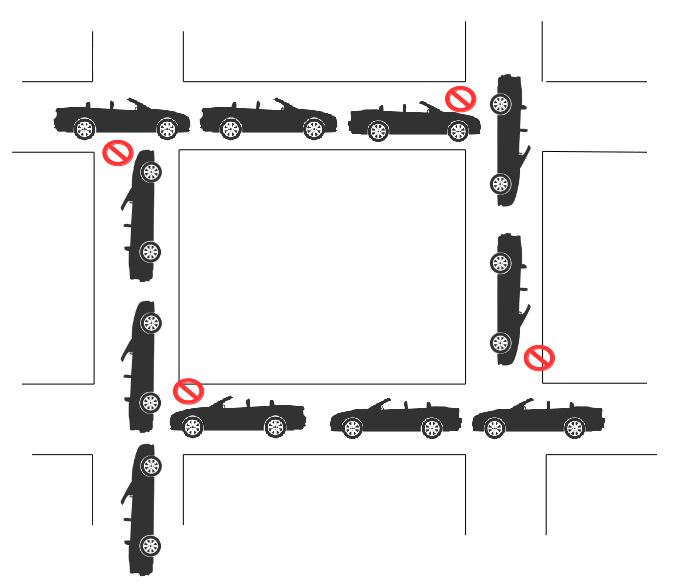
A concurrent application has the risk of a deadlock. A set of threads is deadlocked if every thread is waiting for an event which another thread in the same set has to cause.
For example, if thread A waits for a lock on object Z which thread B holds and thread B waits for a lock on object Y which is held by thread A, then these two threads are blocked and cannot continue their processing.
This can be compared to a traffic jam, where cars(threads) require the access to a certain street(resource), which is currently blocked by another car(lock).
13. Links and literature
13.2. vogella Java example code
If you need more assistance we offer Online Training and Onsite training as well as consulting